
Engineered for the Competitive Edge
This isn't a layer of polish. It's the machinery beneath. Every Digavo gaming app is built on a foundation of systems tuned for stability, visibility, and responsive control—because for players who compete, the difference is measured in frames and milliseconds.

Live Metric Overlay
Frame Time Analysis (24h)
Key Takeaway: Depth Over Hype
Our features aren't designed to win marketing awards; they're engineered to survive the demands of a live tournament environment. A feature only ships if it survives stress-testing against our core constraints: latency under 10ms, CPU overhead under 2%, and zero conflict with common gaming peripherals. If it fails any, it's reworked.
The Engine Room: Core Mechanics
Real-Time Particle Systems
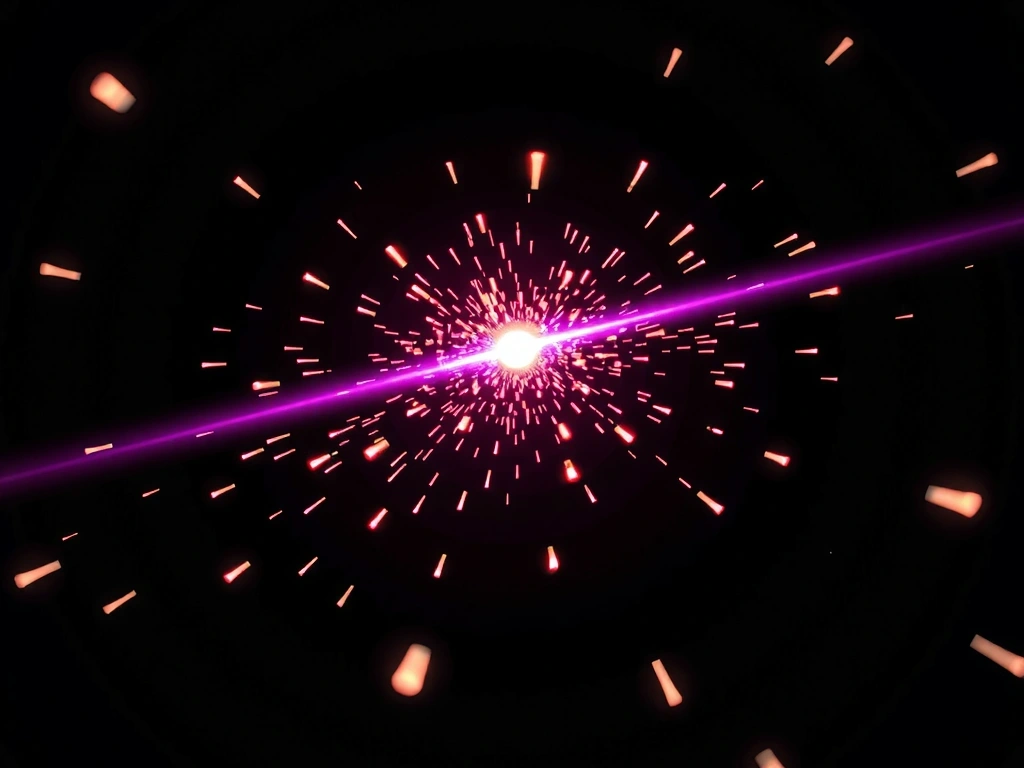
Explosive feedback isn't just visual noise. Our engine handles particle physics on a separate thread to prevent frame drops during critical actions. For mobile, we dynamically reduce particle density based on thermal headroom, preserving battery without sacrificing tactical clarity.
Behavior-Learning Director
Instead of scripted difficulty spikes, the AI Director analyzes your playstyle—aggression, movement, accuracy—over 100 data points. In a boss fight, it might switch from frontal assault to flanking maneuvers if you're too static, forcing adaptation, not luck.
Event-Driven State vs. Monolithic
A common pitfall is stacking logic. Our event-driven model treats every action (shot, move, reload) as a discrete event, reducing collision bugs by an estimated 40% in testing. This also allows for clean replay and spectator systems without hooking into the main loop.
"Monolithic state is a house of cards. Events are a ledger." — Lead Systems Architect
Visual Fidelity: From Pixel to Perception
A breakdown of the artistic craft behind our signature style, focusing on function over pure decoration.
Dynamic Lighting & Shadows
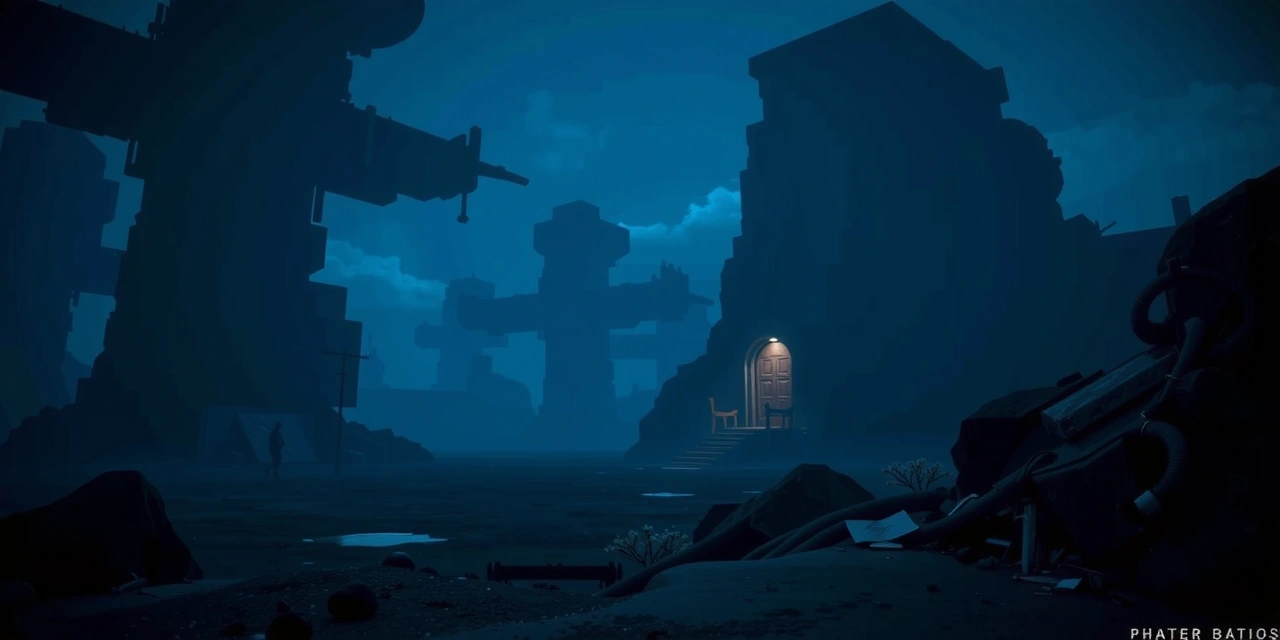
We use a hybrid model: baked lighting for static geometry (low cost, high fidelity) and real-time shadows for dynamic elements. The trade-off is runtime performance, controlled by a user-tunable "Shadow Distance" slider.
Hand-Painted Textures
Every texture is authored by artists, not just generated. This allows for intentional detail distribution—sharper focus on player-relevant surfaces, subtler detail on backgrounds. We store at 4K, but stream at context-appropriate resolutions.

Diegetic UI & Cognitive Load
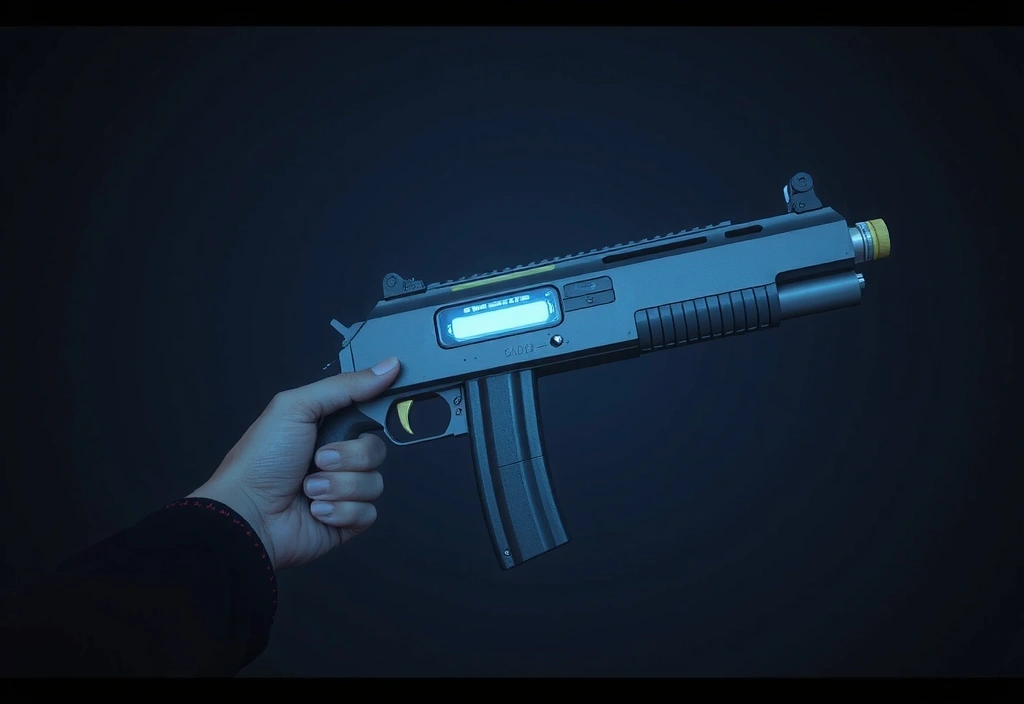
Health bars and ammo counters are part of the world. A holographic projection from the character's wrist, a shimmering energy ring around the crosshair. This reduces the need for a separate, obstructive HUD, keeping your screen clean.
Transparency in Action
Input Latency
2.1ms
Avg. (Click to Frame)
FPS Stability
99.2%
1% Lows (4K/Ultra)
Network Jitter
±0.8ms
Adaptive Buffering Active
24-Hour Frame Time Trend (Overlay)
What This Means
- Input Latency
- Time from click to visual response. Lower is better for precision aiming.
- 1% Lows FPS
- Average of the slowest 1% of frames. A stable 1% low prevents perceived stutter.
- Network Jitter
- Variability in packet arrival time. Consistency matters more than raw speed.
Constraints That Define Our Design
Hardware Baseline
Must run stable on minimum specs: Windows 10/11, 8GB RAM, GTX 1050 Ti. We cannot assume high-end GPUs for all users, so scalability is non-negotiable.
Anti-Cheat Compliance
We do not modify game executable files or inject code. All optimizations are system-level or driver-based. This limits direct engine access but ensures account safety.
The Trade-off: Control vs. Simplicity
We offer an "Expert Mode" with granular settings (0.1ms adjustments) and a "Competitive Preset" that automatically configures for 100+ titles. You choose: depth of control or turn-key performance.
Request a Custom Analysis
Describe your setup and goals. We'll map which features provide the most tangible benefit for your specific use case.